The Magic Hammer
It might be a bit early to call generative AI one of the modern revolutions on par with the invention of the steam engine, although I suspect that even though its development and accomplishments are iterative and not yet fully realized, that honor will soon befall it. I’m walking through a forest at the moment, talking into my portable DJI Mic 2, dictating this article, organizing my thoughts on the go. When I arrive home, I will use AI (or to be more precise, transcription AI, which probably uses LLMs; I’m not entirely up on the technical specifics) to transcribe my thoughts and spoken words so I can edit them for this article.
There’s a lot of mysticism about AI, as I suspect is often the case with new technology when humans encounter it for the first time. For a lot of people, it’s still quite mysterious and magical: the mechanics and processes and procedures and protocols all seem somewhat esoteric, like incantations. But once you become more familiar with how to access the treasure trove of LLMs’ language generation, people get lost in it quite quickly, as evidenced by the millions of people already enraptured by GenAI and its capabilities to provide human-like interaction, a sense of companionship, even romantic interest, or in worst cases inducing psychosis and exacerbating mental issues.
I recently attended a meeting about AI, specifically about responsible and human-centered AI adoption in organizations, and one of the things that stood out to me about this crowd of mostly professionals from business, government, and NGOs was that the general level of knowledge regarding GenAI was quite low. Which isn’t an indictment of any sort. It was just quite astonishing to me, that in the early months of 2026, there were still considerable gaps in the knowledge of people who are asked to use GenAI in their work.
I’ve been into generative AI for I’d say about three years, perhaps a bit longer. And I first encountered it (well, in its modern form) in the guise of Midjourney. As I’m a photographer and filmmaker, I was into the visual aspects of things and sort of fascinated by the messy, hallucinatory results of prompting in a GenAI image tool. The models powering it were still quite primitive and quite messy, and for some reason or other generated these strange elements that looked dreamlike or psychedelic, like tendrils and clouds and morphing shapes, which I found very interesting at the time. It was something new to me. A simple way to create the most liminal images.
For prompts I conjured up phrases that were mystical and abstract to see what it would come up with. I used the titles of my tracks, which are quite evocative and abstract as well at times, to see what those would yield. Back in those days I was hardly ever disappointed, if it wasn’t something I’d hoped for, at least it was something that would sort of surprise me. That was about two and a half years ago, maybe longer. The underlying technology has improved so much that now, the more realistic, slicker "Marvel Studios" look of GenAI imagery isn’t appealing or interesting to me anymore in the least. I don’t really care about generating images that are lifelike. I’d rather have photographs, real images.
"What about text?", you may ask. With text it was less about generating text for me. I started using LLMs for analysis. I was interested in feeding it my art, my poetry, my stories, my concepts that I’ve worked on over the last 20-30 years, to see what types of patterns would emerge, what types of themes recur, and to learn about my own mental mapping, my own artistic sensibilities mapped on a timeline, mapped on my psychology.
I can sense your emerging panic at the word psychology. Trust me, I wasn’t using it as a therapist. I was merely feeding it data points about me to correlate to my writing, my art. And yes, of course there is some (psychological) interpretation necessary to get results, but what I’ve noticed is that LLMs are quite good at analyzing text, language and if you give it constraints, you can keep the Freud out of the findings. So that’s what I used it for, and I did gain considerable insight into my own artistic endeavors and identity. This was the first real use case I found for it.
By that time the AI slop online was becoming more and more prevalent and made me skeptical about the wisdom of putting these tools in the hands of the public. Simultaneously, changes in my personal and professional life were prompting me to look farther afield for new opportunities and possibilities, and I started thinking about what LLMs could do for me, what else I could do with LLMs, what problems I had that they could solve. Without adding to the onslaught of nauseating garbage filling up the internet.
One of the things I ran into was a very simple problem where I was using a Kanban-style to-do app that I had installed on Docker. The Kanban app I was running is called Planka and is open source. Using it I noticed a problem: it didn’t notify me when a "card" (a todo item) was about to be due or was overdue. I decided to try to fix this myself using n8n, a system that allows you to create workflows that interact with software, the internet, run code, and so on. With the help of an LLM, I was able to create my first workflow: one that provided me with the Planka email notifications I needed. I was quite amazed I had succeeded in building this, because I am not a programmer. But using an LLM as an aid, I was able to create this specific solution to my particular problem, for myself, by myself. Which was pretty cool.
This was sort of a first trial to see if I would even be able to do such a thing. Following this successful first attempt, I started to think about what other problems I have which I could perhaps solve by using this type of workflow and LLMs.
In my previous job, I was, for all intents and purposes, director of comms and marketing, and some of my responsibilities were to create a content and social media strategy, apply the strategy and work with different content agencies, marketing agencies who would run our sponsored content campaigns. The reports and analyses I’d get from these agencies, I’ve always felt, were severely lacking. This had always been an annoyance to me, and I wanted more depth from those analyses.
The other thought I had was that LLMs work best with a lot of data, so I asked myself where I could get a lot of data to feed it? To my credit, it didn’t take me thát long to put two and two together, and soon I realized that I had all these social media analytics at my disposal, which would prove a very interesting piece of source material for a new, much deeper analysis utilizing LLMs.
Starting sometime in the middle of 2025, completely naive and quite gullible perhaps in hindsight, I started working on a social media analysis system which I soon came to call MCAS, for Modular Content Analysis System. Modular because the analysis system I was designing could not only be applied to social media, but also be used for instance for website content, newsletters or, if transcribed, YouTube videos and podcasts. At the time, all of this was of course nothing more but blue-sky thinking and not a little ambitious.
The idea was to create an analysis system that takes into account all the context of the company producing the content and using that will create a profile. The system then looks at all the engagement metrics from the social media platform analytics, combining this profile with the metrics and runs multiple independent AI analyses on the data. A meta-analysis then compares these different perspectives: where do they agree, where do they diverge, what new insights emerge only when you combine perspectives? The output flags consensus findings as high-confidence, highlights divergences that need attention, and surfaces patterns that no single analysis would catch.
Over the months I continued developing this system and now in March 2026, v0.99 is up and running (not yet fully v1.00). I’m currently testing the system with client data and early indications are that it works very well (contact me if you’re interested in a trial with reduced costs). With each test I’m becoming more confident that this is a product that is valuable to clients. This was an interesting insight to me: an LLM could be a tool that could be genuinely, even extremely, valuable.
In the last months of 2025 and the first months of 2026, I ramped up my exploration of possibilities and the execution of these types of projects, by finally adopting a tool I was a bit afraid of at first, a bit hesitant to use, because I thought it wouldn’t be for me. I was under the impression it would require the prerequisite of coding knowledge. After working on a number of projects, I started to feel constrained by the chat interface of LLMs. So I decided, what the hell, I’ll try out the thing I’m scared of. I installed Claude Code (Anthropic’s lauded coding tool), and learned how to work with it quite quickly. Using CC made me realize that there were a lot of things I wanted to try out, to see what I would be able to build.
I wanted to build a website for a friend of mine who sells wine, as a birthday present, with specific functionality, a way to select wines from a gallery to request information about. I wanted to build an invoice system for my new company that could talk to my bookkeeping software package. I wanted to rebuild my own website from scratch, over 300 pages of photography, film, music and words. The previous version dated from 2014, built with a WordPress site-builder called Divi. Given the volume of work across multiple disciplines, creating a clear and usable navigation structure was a challenge even back then. Rebuilding it now using AI, I was finally able to design it exactly as I imagined it.
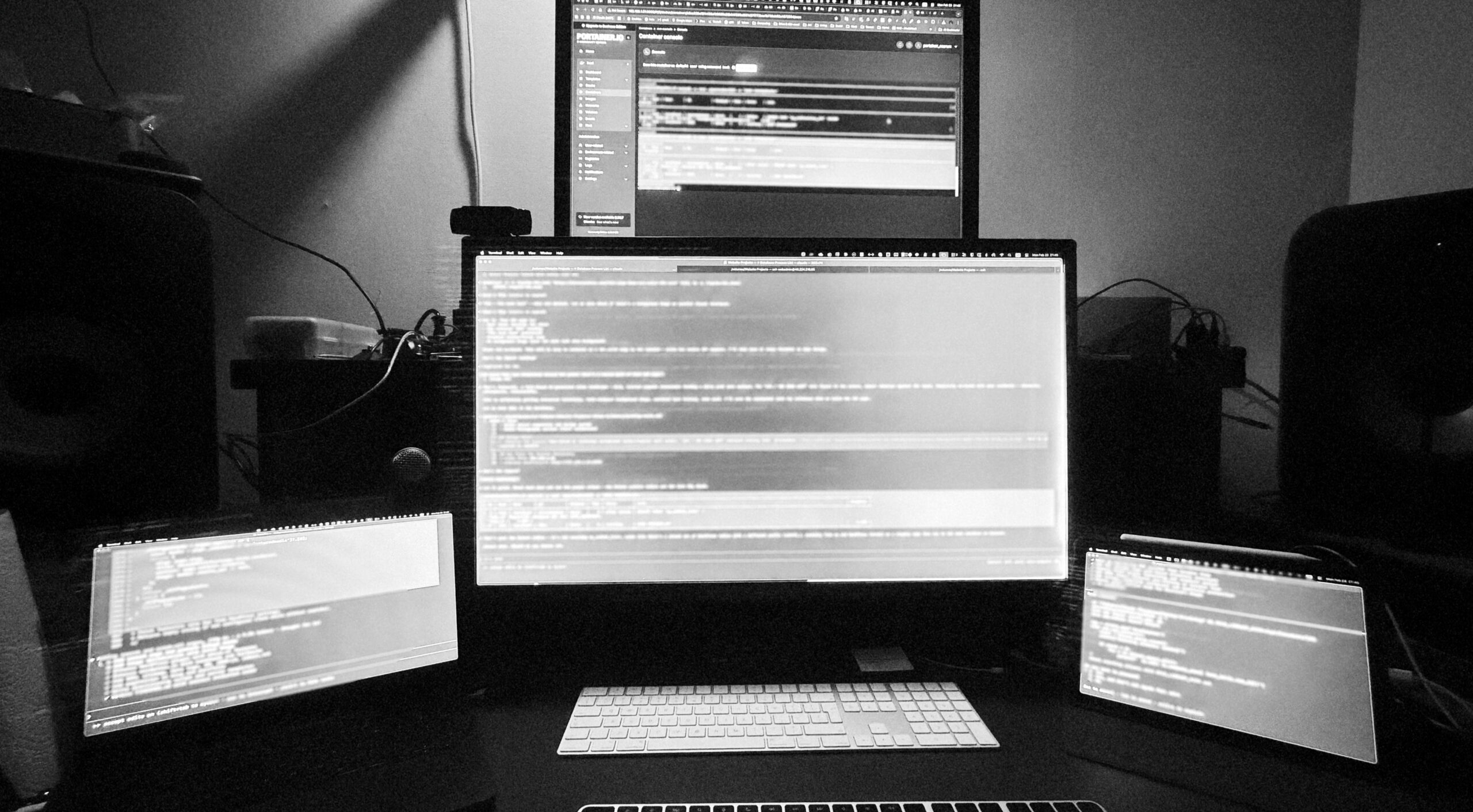
So before I knew it, I was up to my ears in projects. I was running six to eight Claude Code terminals at a time, working on a number of different projects simultaneously, moving at what felt like the speed of light. It was almost literally mind-blowing. It took time after these 14 to 18-hour sessions for my mind to recover from what I’d been doing. I had no idea this was possible and that I’d be capable of doing this. Now I hear you say, "Wait, aren’t you doing exactly what you warned about earlier, treating GenAI like some magic box?" Well, yes. But let me explain.
The difference is: I know what I want to build. I know what the structure of what I want to build is. And over the months that I’ve been working with this tool extensively, I’ve come up with a metaphor that I think explains it really well. This tool is like a very advanced hammer, an ultra-effective, ultra-capable hammer.
If you know that you want to build a house, you know the shape of the house you want to build, you know the basics of how a house is constructed (that you need to build the foundation first and then you can build a second story and then you build the roof and it needs plumbing, etcetera), then you can use this generative technology to create it for you. If you can communicate the goal, the form, how it should be built, and what depends on what, then it can build it for you. But this assumes you understand what you’re asking for. Without that understanding, the tool is useless.
And this is where I see the biggest gap between how people view generative AI versus how it is effectively used. It isn’t a magic box where you just whisper into it: "build me a house" and the house materializes out of thin air. That is not how it works.
Basically, if you don’t know what you don’t know, then this tool isn’t going to help. If you have an inkling of what you don’t know and you’re willing to learn, then this tool can be very helpful and educational. If you know what you don’t know, then this tool can be extremely helpful. It can help you to ask the right questions, sketch out the plan. If you have the architecture in your head, if you can direct, if you can manage a project, then this tool is phenomenal.
And so now, near mid-March 2026, I have completed several projects, all of which I would simply not have been able to accomplish only six months ago. This has only become possible because of recent developments in this technology.
To my main point regarding the gap, I don’t know if the answer is education. I don’t know if there should be mandatory guardrails or manuals, helpful guides proffered for using these tools. At least within companies or organizations, I would advocate for more education, better guidelines, more restrictions, more hands-on training, so employees understand what type of advanced tool they’re working with. I would also try to dispel some of the mythos and magic surrounding it, because that isn’t helpful and muddies the waters. If you view a hammer as something magic, that house probably is never going to get built.
For all my enthusiasm, I have to admit there is a widely used application of LLMs that I despise, and that is the actual language generation part. Nowadays I can’t open a social media platform, read a newsletter or a website without seeing the telltale signs of LLM-generated text. There are the em dashes, there’s the "It’s not X, it’s Y" formula, there are the pedantic explanations, the lists, etcetera. There are so many telltale signs a text was generated. If you’ve been submerged in LLM language for long enough, you start to see it everywhere.
This ubiquitousness is evidence of the phenomenal adoption of the technology by a lot of people who (used to) write texts for a living. My problem with this is, I think, the same issue I have with image generation. I understand that generating text where it’s utilitarian, where it’s functional, may have its place. But generating text that is supposed to be narrative, inspirational, or human, that I don’t think we should leave to LLMs. Just as we shouldn’t leave image generation to LLMs when human art is called for.
Granted, this is a strong personal opinion, as I am what I would still call an aspiring writer, who’s been writing for over 30 years, a photographer and a filmmaker who’s been working for over 20 years generating images with intent, from my mind, my imagination. Outsourcing these things to GenAI seems like a very bad idea to me. As is hopefully clear from the picture I’ve painted you, I think this generative AI is (or can be) very useful technology, as a problem solver, as a lubricant for friction areas. I feel it should primarily help us with annoying tasks or big tasks. Take over the chores and do the heavy lifting. However, I feel very strongly about not using it as a tool that creates our art for us.
I understand that there may be coders out there that say, "Well, you are generating code, and that to us is the same as generating text is to a writer, or is as generating images is to a photographer." And yes, I would agree, I see that. There is a fine line between what is functional and what is art, what is for expression and what is for utilitarian use. And can I even see some value in using GenAI for expression. I’m ready to admit that this is a discussion we haven’t reached the conclusion of yet. I want to be very honest and clear about this, I admit and I see the (perhaps apparent) hypocrisy in that, which I have yet to reconcile.
I’m also keenly aware of all the environmental issues caused by this technology, the exorbitant energy and water use. The social issues that arise from the noise pollution of data centers and the resources it gobbles up. As with all technology, be it the fruits of the industrial revolution, modern transportation, or nuclear energy, I think we will have to find a way as humanity to make GenAI safe, to reduce harm, and to use it in a way that is responsible. And for this technology in particular: not to use it as a weapon. But as we can see from all the other technologies that regularly have been, and still are misused, this is not very likely. I am not too hopeful we will achieve any of this anytime soon. We are still humans. Even though we are now GenAI-enhanced humans with "magic" hammers.
